Knowing exactly where you can enter Vietnam with your eVisa saves time, avoids confusion at the border, and helps you plan your trip around the most convenient checkpoint. Vietnam currently designates 42 entry points for eVisa holders – spanning international airports, land border gates with neighboring countries, and seaports – with 41 additional checkpoints approved in late 2025. This complete Vietnam eVisa guide explains every eligible entry and exit point, what happens when you arrive, and how to choose the right port for your itinerary.
All 42 Vietnam eVisa Entry Points – Original List
When Vietnam launched the expanded eVisa program on August 15, 2023 under Resolution 127/NQ-CP, the government designated 42 international checkpoints where eVisa holders could enter and exit the country. These are divided into three categories: 13 airports, 16 land border gates, and 13 seaports.
13 International Airports
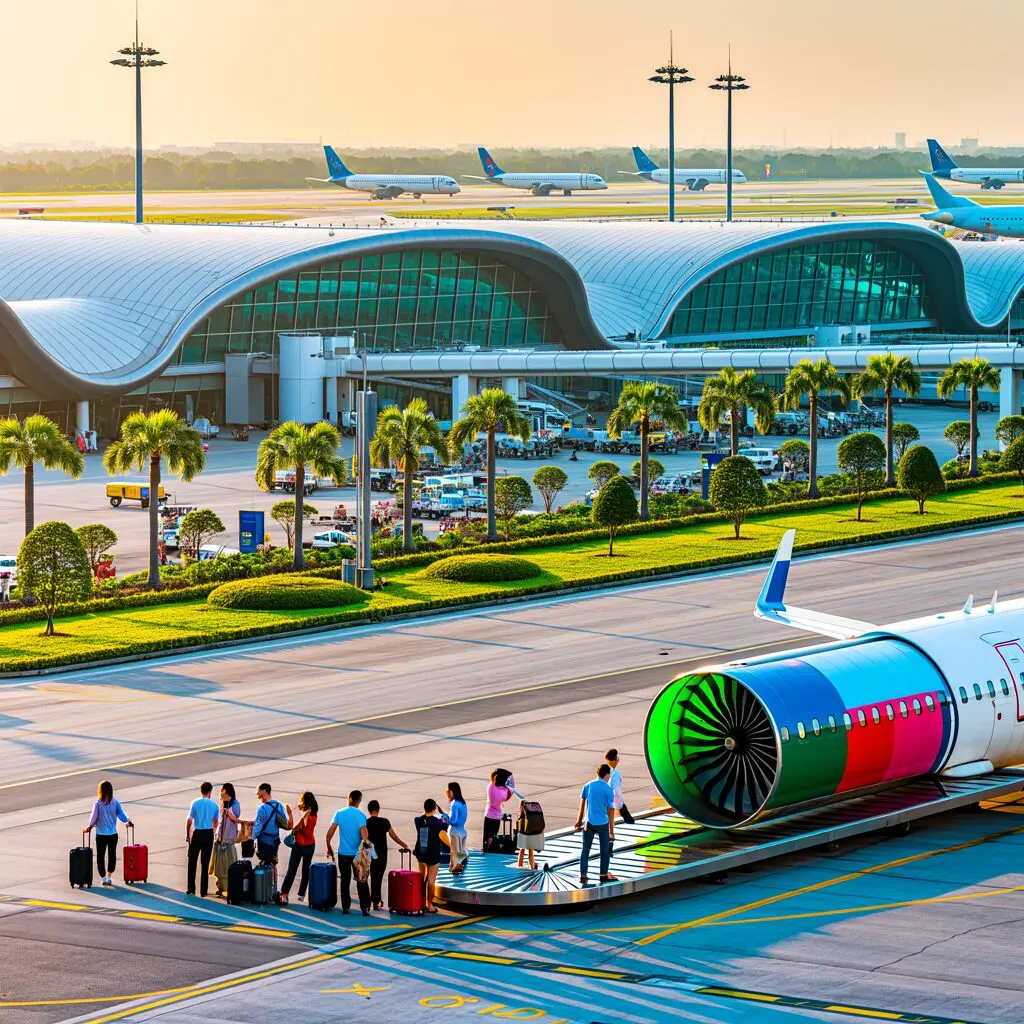
Every major international airport in Vietnam accepts eVisa holders. These are the fastest and most convenient entry points, with immigration processing typically taking 15-30 minutes.
| # | Airport Name | Code | City / Province | Region |
|---|---|---|---|---|
| 1 | Noi Bai International Airport | HAN | Hanoi | Northern |
| 2 | Cat Bi International Airport | HPH | Hai Phong | Northern |
| 3 | Van Don International Airport | VDO | Quang Ninh | Northern |
| 4 | Vinh International Airport | VII | Vinh, Nghe An | North-Central |
| 5 | Tho Xuan Airport | THD | Thanh Hoa | North-Central |
| 6 | Dong Hoi Airport | VDH | Dong Hoi, Quang Binh | Central |
| 7 | Phu Bai International Airport | HUI | Hue, Thua Thien Hue | Central |
| 8 | Da Nang International Airport | DAD | Da Nang | Central |
| 9 | Cam Ranh International Airport | CXR | Nha Trang, Khanh Hoa | South-Central |
| 10 | Phu Cat Airport | UIH | Quy Nhon, Binh Dinh | South-Central |
| 11 | Lien Khuong Airport | DLI | Da Lat, Lam Dong | Central Highlands |
| 12 | Tan Son Nhat International Airport | SGN | Ho Chi Minh City | Southern |
| 13 | Can Tho International Airport | VCA | Can Tho | Mekong Delta |
| 14 | Phu Quoc International Airport | PQC | Phu Quoc Island, Kien Giang | Island |
Note: Phu Quoc Airport is sometimes listed separately as it serves the island’s special economic zone. All 14 airports above are confirmed eVisa entry points.
Major Airport Map – Tan Son Nhat International Airport (SGN), Ho Chi Minh City:
Major Airport Map – Noi Bai International Airport (HAN), Hanoi:
Major Airport Map – Da Nang International Airport (DAD):
16 Land Border Gates
Vietnam shares land borders with China, Laos, and Cambodia. All 16 designated land border gates accept eVisa holders for both entry and exit. These are essential for overland travelers and backpackers crossing between countries.
| # | Border Gate Name | Province | Border With | Nearest Tourist Destination |
|---|---|---|---|---|
| 1 | Mong Cai International Border Gate | Quang Ninh | China | Ha Long Bay (170km) |
| 2 | Huu Nghi International Border Gate | Lang Son | China | Hanoi (136km) |
| 3 | Lao Cai International Border Gate | Lao Cai | China | Sa Pa (38km) |
| 4 | Tay Trang Border Gate | Dien Bien | Laos | Dien Bien Phu (35km) |
| 5 | Na Meo International Border Gate | Thanh Hoa | Laos | Thanh Hoa city (153km) |
| 6 | Nam Can Border Gate | Nghe An | Laos | Vinh city (254km) |
| 7 | Cau Treo Border Gate | Ha Tinh | Laos | Phong Nha caves (200km) |
| 8 | Cha Lo Border Gate | Quang Binh | Laos | Phong Nha (120km) |
| 9 | Lao Bao Border Checkpoint | Quang Tri | Laos | Hue (180km), Dong Ha (80km) |
| 10 | La Lay Border Checkpoint | Quang Tri | Laos | Hue (200km) |
| 11 | Bo Y International Border Gate | Kon Tum | Laos | Kon Tum (70km) |
| 12 | Xa Mat International Border Gate | Tay Ninh | Cambodia | Tay Ninh (30km), HCMC (120km) |
| 13 | Moc Bai Border Station | Tay Ninh | Cambodia | Ho Chi Minh City (60km) |
| 14 | Song Tien Border Gate | An Giang | Cambodia | Chau Doc (30km) |
| 15 | Tinh Bien Border Gate | An Giang | Cambodia | Chau Doc (25km), Sam Mountain |
| 16 | Ha Tien Border Gate | Kien Giang | Cambodia | Ha Tien town (7km), Phu Quoc (ferry) |
13 Seaports
Vietnam’s eVisa-eligible seaports serve cargo vessels, ferries, and cruise ships. Cruise passengers arriving at these ports can use their eVisa for immigration clearance.
| # | Seaport Name | Province / City | Primary Use |
|---|---|---|---|
| 1 | Hon Gai Seaport | Ha Long, Quang Ninh | Cruise ships |
| 2 | Cam Pha Seaport | Quang Ninh | Cargo, cruise |
| 3 | Hai Phong Seaport | Hai Phong | Cargo, ferry |
| 4 | Nghi Son Seaport | Thanh Hoa | Cargo |
| 5 | Chan May Seaport | Thua Thien Hue | Cruise ships |
| 6 | Da Nang Seaport | Da Nang | Cruise, cargo |
| 7 | Quy Nhon Seaport | Binh Dinh | Cargo |
| 8 | Nha Trang Seaport | Khanh Hoa | Cruise ships |
| 9 | Vung Tau Seaport | Ba Ria-Vung Tau | Cruise, cargo |
| 10 | Ho Chi Minh City Seaport (Cat Lai) | Ho Chi Minh City | Cargo, cruise |
| 11 | Duong Dong Seaport | Phu Quoc, Kien Giang | Ferry |
| 12 | Ha Tien Seaport | Kien Giang | Ferry (to Phu Quoc) |
| 13 | Vinh Thuan Seaport | Kien Giang | Cargo |
New Entry Points Added in 2025 – 41 Additional Checkpoints
In December 2025, the Vietnamese Government issued Resolution 389/NQ-CP, adding 41 new international checkpoints for eVisa holders. This brought the total number of eVisa-eligible entry and exit points from 42 to 83. The additions include:
- 4 new airports: Long Thanh International Airport (under construction), Gia Binh International Airport (under construction), Vinh International Airport, and Chu Lai International Airport
- 11 new land border gates: Additional checkpoints along the China, Laos, and Cambodia borders, including Dong Dang, Tra Linh, Ta Lung, and others
- 26 new seaports: Expanded sea access including ports in Quang Ninh, Thanh Hoa, Quang Nam, Binh Dinh, Khanh Hoa, and southern provinces
Important: Long Thanh and Gia Binh airports will become operational eVisa entry points once they officially open. Check the Vietnam eVisa status check tool and the official portal for the latest list before traveling.
Can You Change Your eVisa Entry Point?
Yes – this is one of the most common questions travelers ask, and the answer is straightforward. Since late 2024, the Vietnam eVisa no longer prints the specific port of entry on the visa document. This means you can enter and exit Vietnam through any of the 83 eligible checkpoints, regardless of which port you selected during your application.
Why the Port of Entry No Longer Matters
Previously, the eVisa PDF displayed the specific port of entry the applicant selected. This caused widespread confusion when travelers changed their plans. The Vietnamese government updated the system so that the eVisa simply authorizes entry through any designated checkpoint. Your eVisa approval letter will state your selected port for reference, but immigration officers at any eligible port will accept it.
What to Do If You Selected the Wrong Port
If you made a mistake when selecting your entry point during the application – or if your travel plans changed after approval – you do not need to apply for a new eVisa. Simply proceed to whichever eligible port you plan to use. The eVisa is valid at all 83 designated checkpoints. Make sure your eVisa is valid on your arrival date – check the Vietnam eVisa validity rules before booking.
Entry and Exit at Different Ports
You are not required to exit Vietnam through the same port you entered. For example, you can fly into Noi Bai Airport (Hanoi) and exit through Tan Son Nhat Airport (Ho Chi Minh City) or any other eligible port. Single-entry eVisas allow one entry and one exit at any combination of ports. Multiple-entry eVisas allow unlimited entries and exits within the validity period.
Arrival Procedures by Entry Type
The immigration process varies depending on whether you arrive by air, land, or sea. Here is what to expect at each type of entry point.
Airport Arrival Process
Airport immigration is the fastest and most streamlined option. The typical process takes 15-30 minutes:
- Disembark and follow signs to the immigration hall
- Proceed to the “Foreign Passport” or “eVisa” counter
- Present your passport and printed eVisa PDF
- The officer scans your passport, verifies your eVisa, and stamps your entry
- Collect your luggage and proceed through customs
Tan Son Nhat (SGN) and Noi Bai (HAN) airports have dedicated eVisa counters and automated gates for faster processing. If you need to apply for your Vietnam eVisa, do so at least 5 business days before your flight.
Land Border Crossing Process
Land border crossings take 30-90 minutes depending on the gate and traffic. The process is more manual than airports:
- Arrive at the border gate and locate the immigration office
- Fill out an entry/exit form (available at the counter)
- Present your passport and printed eVisa at the immigration window
- The officer processes your entry and stamps your passport
- Proceed through the border gate into Vietnam
Tip: Always carry a printed copy of your eVisa PDF. Some land border gates do not accept digital copies on phones.
Sea Port / Cruise Arrival Process
Cruise passengers and ferry travelers go through immigration at the port of arrival. The process varies by port:
- Your cruise line or ferry operator collects passenger passport details in advance
- Upon docking, passengers disembark and proceed to the immigration area
- Present your passport and printed eVisa at the immigration counter
- The officer stamps your entry and you proceed into the port terminal
Note for cruise passengers: If your cruise makes multiple stops in Vietnam, you typically only clear immigration at your first port of entry. Confirm with your cruise operator whether you need a single or multiple entry eVisa. Major cruise ports include Hon Gai (Ha Long Bay), Chan May (Hue), Da Nang, Nha Trang, and Ho Chi Minh City.
Practical Tips for Land Border Crossings
Land border crossings are popular with overland travelers and backpackers moving between Vietnam and its neighbors. Here is what you need to know before crossing.
Operating Hours and Best Times to Cross
Most international land border gates operate from 7:00 AM to 5:00 PM or 6:00 PM local time, seven days a week. Some gates have extended hours, while smaller checkpoints may close for a midday break. The busiest times are mid-morning and early afternoon, especially at popular crossings like Moc Bai (Cambodia border) and Lao Bao (Laos border). Arriving early in the morning (before 8:00 AM) typically means shorter queues.
Transport Options from Border Gates
- Moc Bai (Cambodia): Buses run to Ho Chi Minh City (60km, ~1.5 hours). The Phnom Penh – HCMC bus route crosses here.
- Huu Nghi (China): Connected to Hanoi (136km) via the Nanning-Hanoi expressway. Buses and private transfers available.
- Lao Cai (China): Gateway to Sa Pa (38km). Buses and trains connect to Hanoi (252km).
- Lao Bao (Laos): Connects to Dong Ha (80km) and Hue (180km). Buses available on the Vietnamese side.
- Ha Tien (Cambodia): Ferry connections to Phu Quoc Island. Buses to Can Tho and HCMC.
What to Expect at the Border
- Carry your passport and a printed eVisa PDF – digital copies may not be accepted
- Bring a pen for filling out entry/exit forms
- Have small US dollar bills or Vietnamese dong for any incidental costs
- Be prepared for a brief wait – land crossings have fewer staff than airports
- Do not carry prohibited items (drugs, weapons, certain agricultural products)
- Check that your passport has at least 6 months validity remaining
Choosing the Right Entry Point for Your Trip
Your ideal entry point depends on where you plan to spend most of your time in Vietnam.
Northern Vietnam – Hanoi, Ha Long Bay, Sa Pa
Fly into Noi Bai International Airport (HAN) in Hanoi. For Ha Long Bay cruises, Van Don Airport (VDO) is closer. If arriving from China overland, use Huu Nghi or Lao Cai border gates.
Central Vietnam – Da Nang, Hue, Hoi An
Fly into Da Nang International Airport (DAD) – the most convenient hub for central Vietnam. Hue is served by Phu Bai Airport (HUI). Cruise passengers can arrive at Chan May or Da Nang seaports.
Southern Vietnam – Ho Chi Minh City, Mekong Delta, Phu Quoc
Fly into Tan Son Nhat International Airport (SGN) in Ho Chi Minh City. For Phu Quoc Island, fly directly into Phu Quoc Airport (PQC). From Cambodia, the Moc Bai border crossing is just 60km from HCMC.
Vietnam eVisa Entry Points FAQ
How many entry points accept Vietnam eVisa?
As of December 2025, there are 83 designated entry and exit points for Vietnam eVisa holders. The original 42 checkpoints (13 airports, 16 land borders, 13 seaports) were expanded by 41 additional points under Resolution 389/NQ-CP.
Can I enter Vietnam at a different port than my eVisa says?
Yes. The current Vietnam eVisa does not specify a port of entry. You can enter and exit through any of the 83 eligible checkpoints, regardless of what you selected on your application form.
Does my eVisa show which port I must enter through?
No. Since late 2024, the Vietnam eVisa no longer displays the specific port of entry. The eVisa is valid at all designated international checkpoints.
What is the main airport in Hanoi for eVisa entry?
Noi Bai International Airport (HAN) is Hanoi’s main international airport and the busiest eVisa entry point in northern Vietnam. It is located 28km north of Hanoi city center.
Can I enter Vietnam by land with an eVisa?
Yes. There are 16 designated land border gates that accept eVisa holders, located on Vietnam’s borders with China (3 gates), Laos (8 gates), and Cambodia (5 gates).
Which seaports accept Vietnam eVisa?
There are 13 designated seaports, including Hon Gai (Ha Long Bay), Chan May (Hue), Da Nang, Nha Trang, Vung Tau, and Ho Chi Minh City. These serve cruise ships, ferries, and cargo vessels.
Can cruise ship passengers use an eVisa?
Yes. Cruise passengers can use their eVisa to clear immigration at any of the 13 designated seaports. Major cruise ports include Hon Gai, Chan May, Da Nang, Nha Trang, and Ho Chi Minh City.
How long does immigration take at Vietnamese airports?
Typical airport immigration processing takes 15-30 minutes. Major airports like Tan Son Nhat (SGN) and Noi Bai (HAN) have dedicated eVisa counters for faster processing. Peak hours may take longer.
Can I exit Vietnam at a different port than I entered?
Yes. You can enter and exit through any combination of eligible ports. For example, you can fly into Hanoi and exit through Ho Chi Minh City or any other checkpoint.
What are the new eVisa entry points added in 2025?
Resolution 389/NQ-CP (December 2025) added 41 new checkpoints: 4 airports (Long Thanh, Gia Binh, Vinh, Chu Lai), 11 land border gates, and 26 seaports. The total is now 83 eligible entry and exit points.
Is Phu Quoc airport an eVisa entry point?
Yes. Phu Quoc International Airport (PQC) is one of the designated eVisa entry points. You can fly directly into Phu Quoc Island and clear immigration there.
Do I need a printed eVisa at the border?
Yes. Always carry a printed copy of your eVisa PDF. While some airports may accept digital copies, land border gates and seaports generally require a physical printout.
The vietnamevisa.info editorial team specializes in Vietnamese travel documentation. Last updated: July 2026.